Showing posts with label Discussion Post. Show all posts

Monday, February 9, 2026

Organizing Titles: A Reader’s Dilemma

Question: Do you ignore a, an, and the when organizing your lists, or do you include them exactly as written? 

I recently ran into a situation that made me completely rethink how I organize my reading lists. For years, I’ve ignored “the” when alphabetizing book titles, but I didn’t apply that same logic to “a” or “an.” It honestly never occurred to me that I should be treating all three articles the same way—until now.

That got me wondering how other readers handle this. Do you organize your book lists alphabetically at all? And if you do, do you file titles with the article included, or do you alphabetize based on the first meaningful word that follows it?

For example, would A Court of Thorns and Roses be listed under A or C? Does The Night Circus live under T or N

I’d love to hear how you organize your shelves, spreadsheets, Goodreads lists, etc.!

Wednesday, April 29, 2020

What do you do with the books you DNF?

Hello, lovelies! I haven't done a discussion post in ages, even though I've saved several topics that I want to talk about. DNFing books happens to be one of them!

1) Do you DNF books?
2) How long do you typically give a book before deciding to DNF it?
3) What do you do with the books you DNF?

When I first started blogging (as Books, Sweets & Other Treats), I would finish every book I started. I felt obligated to read the review copies I received, even if the story wasn't something I was enjoying. It made reading feel like a chore, and it's one of the reasons I stopped blogging after college. Falling in love with books is what makes you want to read more books! If you don't like what you're reading, then what's the point?

I told myself things would be different when I started blogging again, and they have been. I don't put as much pressure on myself, or feel the need to post something every day. I post when I have time, or when I've made a commitment (like for a blog tour or an ARC). I try to read review copies before their release date, but it doesn't always work out. It has made this entire experience much more enjoyable! I look forward to logging on and talking to you guys about books! Blog hopping is something I really try to make time for, because it makes me happy to see what you've been reading, and to let you know that your content is appreciated.

Now that I've started DNFing the books that don't work for me, I needed a way to review those in a simple and effective way. That's why I started DNF&Y, and just do a single collective post at the end of every month. As I DNF a book, I write down what it was that I disliked, and then I move on. If it's an e-ARC, I delete it and don't think about it again. If it's a physical copy, I feel stuck. Do I want to host a giveaway for a book I didn't like? I don't like the idea of promoting something that didn't work for me, but my experience might not be your experience. I'm not going to sell an ARC for obvious reasons, and it feels wrong to donate them (because Goodwill and other thrift stores will sell them). If I donate them to my local library, they might toss it, or they might also try to sell it during a Library Sale.

I feel like this really limits what can and cannot be done with an ARC. I've never heard of a publisher or author requesting people send their ARCs back, but donating them doesn't work either. I've found two ways that have worked for me in the past, but I would love to know how you handle similar situations.
  1. I'll host a giveaway and hope the winner likes it more than I did. 
  2. I'll put the book in a Little Free Library and hope someone else likes it more than I did. 
It's possible for a book I've DNFd to find a happy and loving home, but there's no way to really know for sure.

I know a lot of people that simply don't review the books they've DNFd, and just choose to remove them from their Goodreads and such altogether. I'm not a fan of pretending a book didn't happen, because I believe knowing why you didn't like something is just as beneficial as knowing why you loved something else. What you hated about a book, might be something I look for and enjoy.

There are others that continue reading a book despite their disinterest, and I don't know how you keep loving what you do, when you suffer through part of it. Do you keep reading because you feel obligated, or do you think the story might improve?  Either way, what do you do with those books that you disliked or wish you would have DNFd?

Saturday, January 25, 2020

When you're done with a book, do you immediately write a review, or do you sit on it for a few days?

I know there are people that like to process books after they read them, but I like to get my thoughts down as soon as possible. If a book really speaks to me, or if it's problematic, I take notes. If I'm reading on my iPad, I'll copy the sentence or paragraph that stood out, and then I'll email it to myself with a few quick thoughts typed underneath. When I've finished the book, I'll go back and reference those points and incorporate them into my review.

As some of you may know, and for those of you that guessed based on my blog's title, I do dog-ear my books. What you might not know, is that I occasionally mark my books in the margins in addition to using an obscene amount of sticky notes. If I fold the top corner, it means that's the page I'm on. If I fold the bottom corner, it's a page I want to reference later. The sticky notes are for when I have more thoughts than the margins can hold, and need additional space for words. Are you hovering over the unfollow button right now? ๐Ÿ˜‰ Fear not! Your books are safe. I only do it to my own.

I'm getting sidetracked, but it's also kind of relevant? When I'm reading, I am completely absorbed in the story, and I like to keep track of my thoughts as I move through the book. Once I'm finished reading, I feel compelled to spew those thoughts from my fingertips as quickly as possible. As time passes, my immediate thoughts and feelings fade, even with my excessive note-taking. I want to write my reviews when I'm caught up in the emotions a story elicited, whether they're good or bad. I feel like it adds another layer of authenticity to my reviews, because you not only get my thoughts, but the feelings it evoked from me as well. I'm not saying you can't have those same feelings later on, but they never feel as powerful when I wait to write a review. They're still there -- just dulled -- and it's difficult to re-enter the same emotional state from before.

There are times when I cannot immediately write a review and schedule it, which is why I usually keep a notebook lying around. I'll basically write an outline of my review and the key thoughts and feelings I had while reading the book, and then I can refer to that outline later when I have a chance to sit down and type it all up. Sometimes I'll even write the entire review by hand, if I'm really caught up in what I'm thinking.

There's only one other reason I'll let a book sit unreviewed for a few days: I don't know what to say. When I love or hate a book, it's easy to explain why. It's when I feel neutral about a book that I have trouble. That usually means it was good enough to finish, but not one I would recommend or read again. Those reviews are so difficult to write, because what else can you say? "I liked it, but it was just okay." Why was it just okay? "It didn't really speak to me?" I feel like those reviews start to sound repetitive, and that's why I've started doing mini reviews for those titles. I can say very little and still feel like I've reviewed the book properly.

What about you? Do you like to write reviews when you're in the moment and swimming in feelings, or do you like to sit on them for a few days until your thoughts and emotions settle? Which path leads to a more productive and coherent review?

Friday, June 28, 2019

Q [10] Do you want people to point out the flaws in your reviews?

Let's be honest... we're human and we make mistakes. Unfortunately, being human also means taking offense at people pointing out those mistakes. I know my reviews likely contain spelling and grammar errors, which is inevitable for me, but do I want those mistakes brought to my attention?

Honestly, I don't think I would mind, because then I could fix the error and the review would be better for it. However, what about when someone disagrees with the content you've added in your review? Maybe they think you're mistaken about events that occurred, or that you didn't perceive the story in the correct way? How would you react to those helpful souls that left comments explaining everything they thought you did wrong?

I know most of us enjoy a good book discussion, even if we have differing opinions, but what if it's not about the book itself? Instead, it's about what we thought happened within a story? Do you think you would be as accepting of those commenters that decided to say something?

I'm very meticulous when I take notes on a book, and often keep a notebook around when I'm reading. It's not easy to quote an audiobook, but I do my best to make sure I copy down everything word for word when I want to include something in my review. I know I could make a mistake, like leaving out a word or misspelling a name, and I would be understanding if someone pointed out those mistakes so I could fix them. I don't believe I would be as amendable if someone wanted to correct the content of my reviews. We may have perceived the same situation in two very different ways, and that's part of the reading experience.

What do you think? Has anyone ever commented on a review and told you that you'd make a mistake? Grammar or otherwise? How did you react? If not, how to you think you would respond to something like that happening?

Tuesday, June 4, 2019

Q [9] Book Anxiety: Is it a thing?

I wouldn't call myself an overly anxious person, but there are things that stress me out and make me feel nervous. Books are one of those things, and it's one of the best worst feelings. I dislike feeling anxious, because my chest feels tight, I start holding my breath, and occasionally grind my back teeth. It's an overall unpleasant feeling, and that's just the physical.

It's really distracting when I read, even though I know a book has a single and inevitable ending. My brain still wants to veer off in multiple directions and assess all the different possibilities. It's like my mind cannot sit still and wait for the story to get where it's going, so it comes up with all these other alternatives until I feel like I'm going to explode. I know this means a book is amazing, and I really love that, but it also means I start skimming pages before I can stop myself and force my brain to slow down.

As I'm skimming, I'm looking for the Big Details so I will have an idea about what's going to happen next. Depending on the level of my anxiety, I might look at the end to see what happens before flipping back to my spot. Blasphemous, I know, but I'm totally okay with it. It makes me feel less anxious, and my brain settles down, which allows me to re-enjoy the book. I don't like feeling super stressed waiting for the other shoe to drop, and would like to know where both shoes land before my feet get there.

A recent example would be The Girl in Red by Christina Henry, because the main character is constantly in danger. Every decision she makes is life or death, and that's scary. I was concerned for her well-being, and second-guessing every choice she made. It made me feel bananas waiting to see if she would be okay at the end. Also, you should definitely read The Girl in Red. It's remarkable!

These are often the books I get the most excited about, and the stories I want everyone to read. I know my process sounds insane, and I was wondering if anyone else felt that way? Do you feel anxious when you read? Do you skip ahead to make sure everything is going to be okay? If not, how do you deal with your book anxiety?

Monday, April 15, 2019

Q [8] Do you prefer hardcovers or paperback copies?

Book jackets (sometimes referred to as dust jackets) drive me bananas. They're constantly slipping off, or bending and tearing at the edges. I know they're there to protect to book, and that the jacket being damaged from normal wear and tear means the book itself is left relatively unscathed. However, unless they are taped down (like library books, which is awful on its own), they don't stay in place.

I read in very unconventional places, like next to the stove when I'm cooking (I know, I know), but I also read a lot outside of the house. I have three kids, so we're pretty busy, and I always take a book with me when we go somewhere. Hardbacks don't always fit in my book sleeves, and I like the padded protection they provide the books tossed into my purse or diaper bag.

Paperback copies are also less bulky. They take up less space on my bookshelves, which means I have more room for books (always a good thing). Plus, paperbacks are lighter, so they hurt less when they fall on my face (this happens more than I'd like to admit). They also tend to be similar in size, so my shelves look more uniform, even though I like some of the chaos.

What about you? Do you prefer hardcovers with book jackets, or paperback copies? Are you okay with both? Let's talk books!

Tuesday, February 19, 2019

Q [7] Does the age of a character's love interest matter to you?

Personally, the age of a character's love interest does not matter to me, as long as they're both consenting adults. Some books really toe the line of what an adult actually is, so I'm going to go with 18 for the purposes of this post. How do you feel when a character's love interest is significantly younger or older than they are? Does the character's gender matter? 

https://www.goodreads.com/book/show/27177019-here-so-far-away
Last year I read Here So Far Away by Hadley Dyer, which I really enjoyed. The main character, George, was emotionally and somewhat physically involved with an older guy. In his defense, she mislead him at the start of the book, and made him think she was older than she was. They both struggled with their feelings, but couldn't deny that they were attracted to one another. I thought the relationship between the two felt very authentic and believable. George was just shy of 18, and I believe she was old enough to make her own decisions. However, if anyone had discovered them together, there would have been severe consequences for them both (more so for him, I think). 

I thought Hadley Dyer did a wonderful job managing the minefield of their relationship, and shedding light on their emotional turmoil. There was an honesty between the two characters that was beautiful to see, and George finally found someone that she could be herself with. They spent a lot of time together trying to figure out their feelings (was it a fleeting attracting, did it have the potential to be long-lasting, was it better to ignore each other, etc.), while also keeping everything a secret. It felt realistic, and I'm sure there are a lot of people out there that have dated someone much older than themselves. George is a character they can relate to, myself included. When I was in high school, I dated a guy that was six years older than me. Looking back on it now, I regret the relationship, but not because of the age difference. The guy was a douche canoe, and I stayed with him for all the wrong reasons. 

After reading and reviewing this book, I noticed a lot of people saying they liked concept for the overall story, but they were turned off by the age difference between the two characters. There were comments that said it set a bad example for teenagers today, and that the gap made them uncomfortable. There are so many people that will refuse to read books simply because they dislike how much older one person is than the other. 

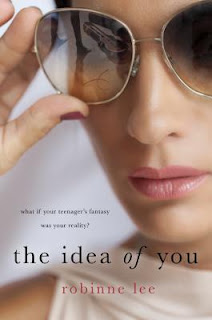
https://www.goodreads.com/book/show/31450913-the-idea-of-youAnother book I read last year was The Idea of You by Robinne Lee. It was actually recommended to me by two of my friends, so I didn't hesitate to pick it up. Unfortunately, I didn't love it as much as they did, but the story did have some merit. Solรจne was intimately involved with someone much younger than herself, and his career made it hard for them to keep their relationship a secret. They try to sneak around for awhile, because she has daughter and he doesn't like to comment on his personal life, but a slip up was inevitable. 

Once their relationship was made public, people criticized her for her age and said she was too old to be with him. First of all, thirty isn't old. Secondly, it wasn't anyone's business. They were both adults, and not just barely, but fully into adulthood, so their decisions should have been personal and private. I hated how they were scrutinized, and that people made comments about her being old enough to be his mother. 

After reading and reviewing this book, I noticed fewer comments about their age, but people still seemed uninterested in a book that had such a large age difference between two of the characters. It's like the topic is taboo, even though it's something we see every day.

Why does age matter if they're both adults that agree on the relationship? Do you think it sets a bad example? Why? Is it okay for one gender to date an older person and not the other? Let me know what you think!

Tuesday, January 29, 2019

Q [6] Do you watch book trailers?

Have you ever watched a book trailer? If you haven't, they're very similar to movie trailers. They give you a general idea of what the book is going to be about; however, I've seen some book trailers that reveal crucial information that spoils part of the story. I think book trailers should only include the information within a blurb, otherwise, they risk sharing too many details (and we all know even the blurbs can contain too much information about the story). 

Why are book trailers a part of the marketing and publicity for new books? Where are they advertised? I feel like they have a really high potential to spoil something about a book. Even if they're not spoiling the content, they do damage and alter the characters for me. I like to picture the characters in my head as I read, and the trailers essentially give you a picture to recall. They're not always accurate, or even follow all of the descriptions listed in the book, so I would rather create the images on my own. It's also why I like reading a book before watching the movie, so I already have a clear idea of what the characters look like to me.

Do you watch book trailers? Do you actively search them out, or just click on the ones you randomly come across? Or are you like me, and try to avoid them altogether? I watched a lot of trailers before writing this post, because I wanted to see how trailers made my publishers compared to the ones made by fans. If it's just music and words, I'm okay. It was when the book trailer felt like a movie trailer that I lost interest. Do you think there is a large fan base for book trailers?

Sunday, August 19, 2018

Q [5] What was the first book you read and reviewed?

Now, without looking... do you remember your very first book review? What was it? I recently realized my one-year blogoversary was coming up, so I was double checking the exact date when this question popped into my head. I started reading some of my reviews from a year ago, and it was like I was seeing them for the first time. It had been so long since I'd written them, I'd almost forgotten what they said!

My first book review was The Winter King (Weathermages of Mystral, #1) by C.L. Wilson. I remember loving the book and immediately pre-ordering the second! It's still sitting on my shelf (unread), but I've already made plans to read it soon. Re-reading my review made me want to start it right away!

Another post I did in the beginning was Bitten at BEA. A few years ago, when I attended the Book Expo of America, a women bit the flark out of my arm (on purpose) at one of the book drops. Karen from For What's It's Worth mentioned the incident on her blog, and when people started asking questions I decided to write a post that explained the entire thing in detail.

What about you? Did you write something really amazing when you first started blogging that you feel didn't get the attention it deserved? How did you feel after re-reading some of your older reviews? Do you think your method for writing reviews has changed? Is there anything you wish you'd done differently from the beginning?

Let's do something fun! Please leave a link to the very first review on your blog, and also any really old posts that you think deserved more attention than they received.  We all know that starting a blog is a lot of work, and it takes time to build relationships and make friends, so it makes sense that our blogs received very little love in the beginning. Were there books that you enjoyed and still want others to read? Share those reviews here! I want you to dig deep and find those long-forgotten posts that are in need of a little dusting.

I know some of you have been blogging for years, so it'll be interesting to see what you come up with! You can add your link below, or just paste them into the comments. Be sure to list the title of your post (since you can leave more than one) and your blog name -- that should make it easier to locate specific posts and who wrote them.

Monday, May 21, 2018

Q [4] Why are we okay with human voilence but not animal cruelty?

After reviewing The Female of the Species by Mindy McGinnis, I realized a lot of people weren't going to read it simply because animals get hurt. However, this book includes rape, murder, drugs, etc., but fewer people have an issue with reading about those topics. What is the difference? Why can we read about people getting hurt but not animals?

I've had people tell me that animals are innocent and defenseless, but a drugged teenager in the woods with a group of heroin addicts is also innocent and defenseless. She didn't ask for that to happen to her, she doesn't want to suffer their abuse, but we can read about that and say the book was powerful or highlighted important aspects of society. I'm pretty sure I said similar things in my review, but also mentioned how I wish the animal cruelty had been left out. I can understand its importance and why the author included it, but I don't like to read about it. I don't like to read about people getting hurt either, but I don't seem to have as much trouble with it.

This question has been on my mind since yesterday, so I thought I'd ask and see what everyone else had to say. Why are we okay when we read about human violence and disturbing or dark topics, but we tend to avoid books that hurt animals? If the books are fiction, shouldn't we be able to tolerate reading about both?

Another example would be Sky in the Deep by Adrienne Young. It was very violent, but the parts that made me cringe were the animal sacrifices. An owl having its throat slit was worse that a guy being stabbed through the torso. I feel like I should be equally disturbed by both.

Friday, April 27, 2018

Q [3] Should we read books that make us uncomfortable?

This is a post I've been wanting to write for awhile, but I wasn't entirely sure how to approach my question. There are a lot of different ways for books to make us uncomfortable, and it varies from person to person, but should we still read those books?

Forbidden by Tabitha Suzuma is about a brother and sister that fall in love. It is a beautiful, heartbreaking story that left me crying in a corner for at least half an hour. I also threw the book against a wall and my husband thought something awful had happened to me. This book wrecked me. Do I agree with the content? No. I don't think siblings should fall in love with each other, but that doesn't mean it isn't possible. The setting for this story, their circumstances... gah, you'd just have to read it to fully understand what I'm trying to say.

There are a lot of people screaming about how they'd never read something about incest, yet they love Game of Thrones. Aren't two of the main characters sleeping together and popping out babies even though they're brother and sister? Why is one different from the other?

Sky in the Deep by Adrienne Young (read my review here) contains a lot of animal sacrifices, which really bothered me. I don't like animal cruelty, and I've also been a vegan for over six years. Does that make this a bad book? No. I loved this book and the story. It was unique and brilliant, but those instances made me uncomfortable. I cringed and wished they weren't included in the story, but I can see how they were relevant to the time period the author was trying to convey. It was part of their culture.

King by T.M. Frazier was a book that made me sick to my stomach, and one that I refused to continue reading. The main character rapes a girl and then lets his friend take her away to be raped again (for more detailed information you can see my review here), and that completely ruined the book for me. It wasn't something I could read about and move on from, because I feel like that behavior should be condemned in every capacity. However, this is a book beloved by many. Are there certain topics that are okay to read about even if they make us a little uneasy? Where is the line? What makes it a yes or a no?

The Hate U Give by Angie Thomas was amazing (read my review here), but I wanted to include it because of a few of the comments I've seen regarding this book. A lot of people don't want to read this because they feel as though it's demonizing white people. "Reverse racism" is a term I've heard more than once in relation to this book. I felt like Angie Thomas told a story that needed to be heard. Black Lives Matter and people are not getting the recognition they deserve. Should you read this if the topic of racism makes you uncomfortable? What about it's relevance to today's society?

Here So Far Away by Hadley Dyer (read my review here) is another book I really enjoyed, but received a lot of conflicting comments over. There is a relationship within the story that has a pretty big age difference. This fact alone is keeping a lot of people from even trying the book, and they have no idea what the circumstances are surrounding the two people involved. I thought Hadley Dyer handled a delicate situation incredibly well and created something lovey and thought-provoking. What would you do if you found yourself in their situation? What if you were a parent? Is there anything that would make this okay?

There are a lot of things that can happen within a book that will make people avoid it like the plague. What topics do you stay away from? Why? Do you think we should read books that make us uncomfortable if they provide a different perspective? Books that we wouldn't normally read might be the most enlightening. I've learned a lot from books that put me in situations I would never find myself in. They make me think. They make me question what I know. They make me want to learn and grow and find out more about myself and the world we live in.

Do you think that we should read books that unsettle us in some way? What are your thoughts?

Tuesday, March 13, 2018

Q [2] How many books do you read at once?

This is something I’ve been wondering about lately! I know it’s different for everyone, and I’m just curious what works for you. How many books do you read at one time? A few years ago, I would have said only one. I felt like I needed to get through one story before starting another. It was confusing bouncing from one book to the next, and I had trouble separating the details.

I don’t know when the change occurred, but suddenly I was reading four or five different books at once. I was definitely being controlled by my moods, but also by the format. In the last year or so, I’ve started listening to a lot of audiobooks, replaced my long-dead Nook with an iPad (so ebooks were an option again), and this past year we’ve really gotten into comic books. It's opened up a lot of different avenues for reading, and I like to take advantage of them all! I feel like I get something different from each of them, too.

This is what I’m reading right now: one physical book (for myself), one physical book (a chapter book at night for my son), one electronic book, an audiobook and various comics. In my mind, it's like I have several incomplete stories being thought about, and I cannot wait to get back to each one!

I can plan what I want to read the next day, but it almost always changes. I love that I have so many options to choose from! What do you do? How do you like to read the written word? Let me know!

Wednesday, October 11, 2017

Q [1] What makes a Superhero?

Kristen from Metaphors and Moonlight left a comment on my Gwenpool #0-5 post that prompted this question. She said, "I have to admit I'm not so much interested (in) the superhero ones..."

When I responded to her comment I said, "TMNT isn't really about superheroes, just turtles with ninja skills, lol." J was sitting next to me on the couch (reading Daredevil) and told me I was wrong. He was very adamant about the Ninja Turtles being superheroes.

What is the criteria for being a superhero? Do you have to save the world? Is there a difference between a hero and a superhero? Daredevil and Black Widow prove that you don't need special powers, so what is it?